01What we measured
We took the IBEX 35 stocks and, for each, two closing prices: 28 October 2021 and 27 October 2026. In between we added up the dividends per share with an ex-date inside that window, which are the ones paid to whoever already held the stock that day. That gives two returns: price only, and price plus what was paid out.
- Closing prices are adjusted for splits and reverse splits, not for dividends. If they were, the dividend would be counted twice.
- Dividends are gross, before the 19% Spanish withholding tax.
- They are not reinvested: this is what someone gets if they buy, hold and leave the cash in the account. Reinvesting would widen the gap a little.
- Puig only listed in May 2024 and does not have five years, so it is left out. That leaves 34 stocks, 33 of which paid something over the period.
02The gap, in one number
The median gap, stock by stock, is 25.6 points over five years: about 3.1 points a year. After the 19% withholding tax, 20.7 points.
For 21 of the 34 stocks the gap is over 20 points. An equal-weighted portfolio of all 34 would have gained 106.9% on price and 136.2% with dividends.
03Three stocks where the sign flips
- Telefónica: −12.9% on price, +27.1% with dividends. €1.50 per share paid on a €3.74 purchase.
- Enagás: −10.1% on price, +23.4% with dividends. €6.56 per share on €19.60.
- Redeia: −16.7% on price, +8.7% with dividends. €4.60 per share on €18.07.
In all three, what was paid out outweighs the fall in price. At Redeia the dividends add up to almost three times the final gain. Amadeus sits in between: its share price ended where it started (+0.2%) and with dividends it returned 8.8%.
04Where almost nothing changes
At the other end are stocks that pay little compared with how far their price moved. Indra's share price rose sixfold (+509%) and dividends add 11.6 points, 2% of the gain. Solaria paid nothing over the period.
Of the nine stocks whose price fell, six are still down with dividends added: Cellnex, Grifols, Fluidra, Colonial, Acciona Energía and Solaria. A dividend cushions a fall; it only turns it into a gain when it is large and sustained.
So the gap does not say which stock is better. It says how much of its return arrives as price and how much as cash in the account. A company that pays out a lot tends to rise less in price, because what it pays out is no longer inside it.
05Where the mistake creeps in
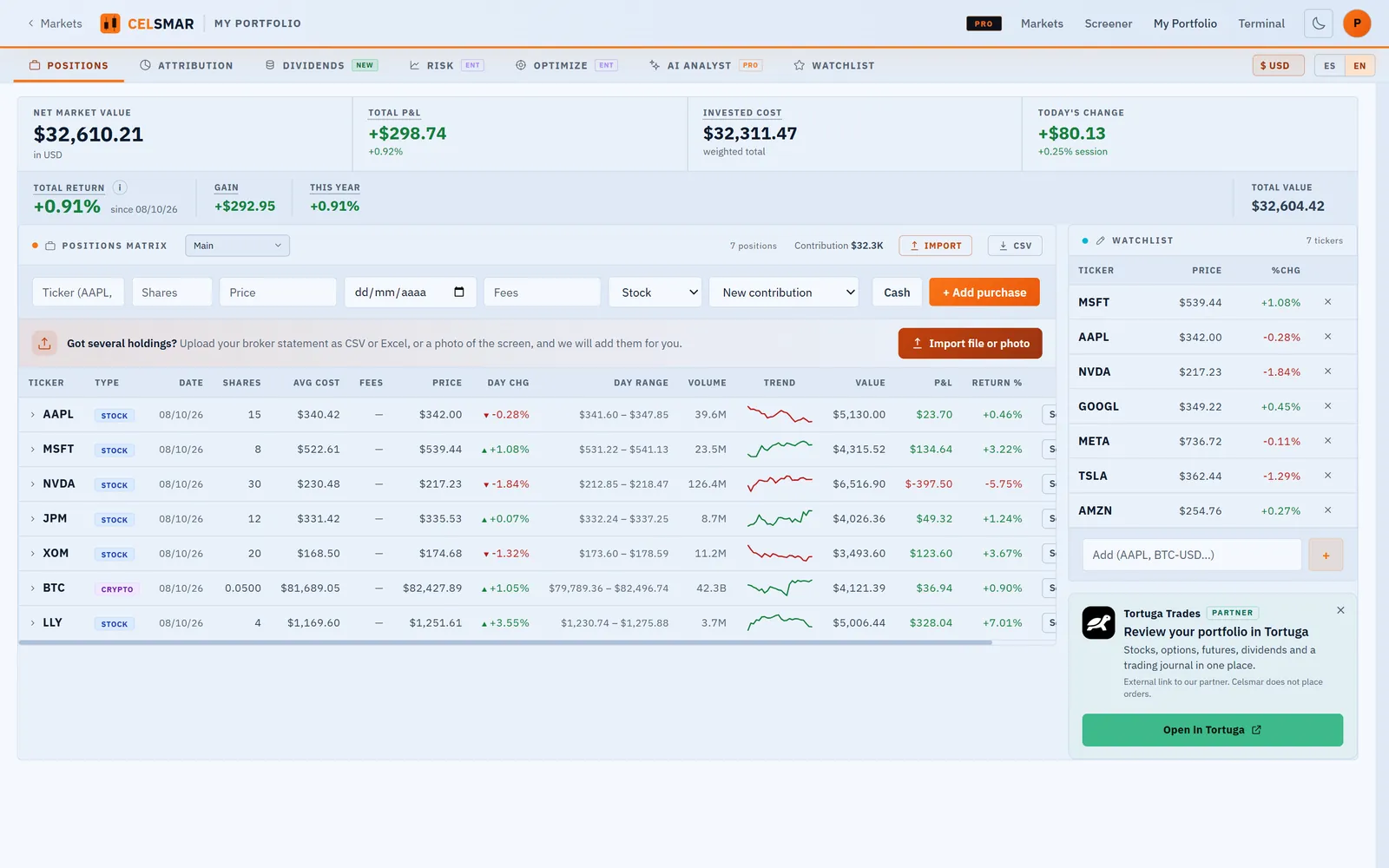
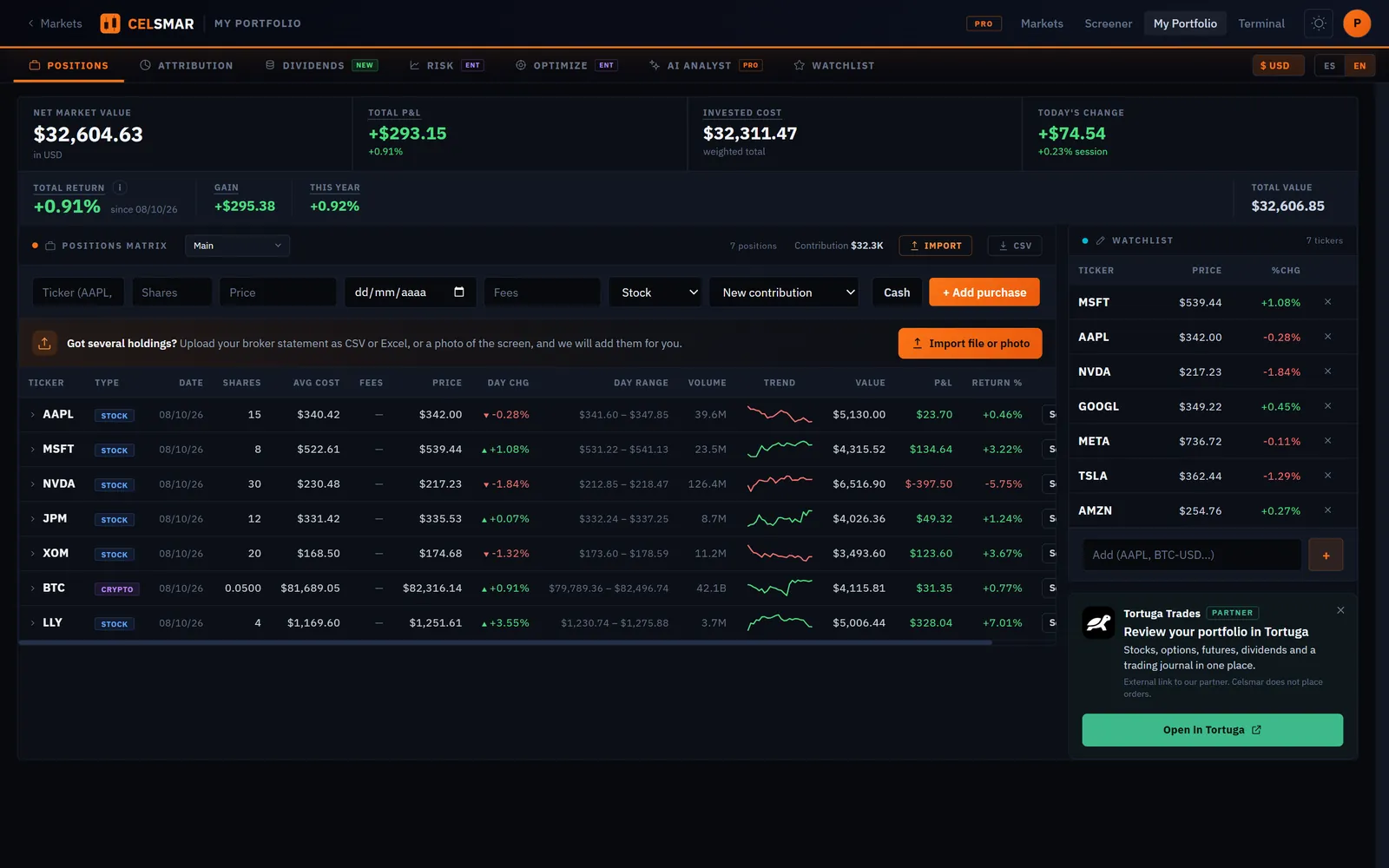
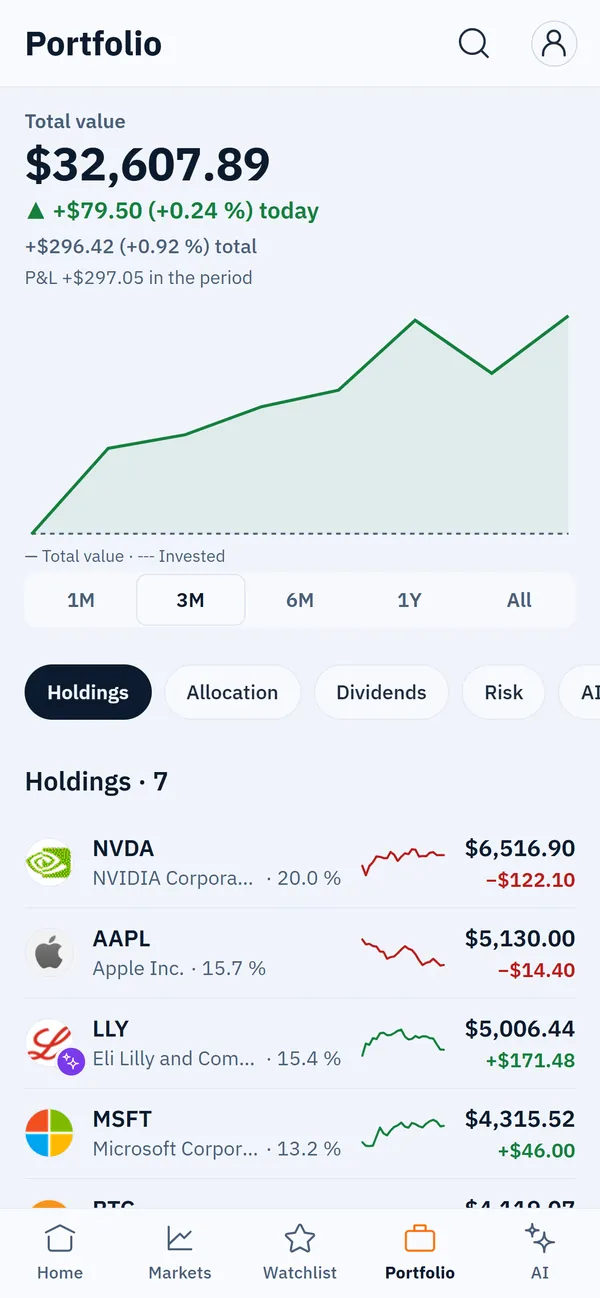
This measurement came out of checking how our own portfolio screen worked out returns: value today minus what you paid. That is a correct calculation and the same one the Spanish tax office uses for capital gains. Dividends are taxed separately and land in the brokerage account, not in the position, so they are left out.
Looking at them separately is fine. The problem comes when you compare two figures that do not follow the same rule:
- The IBEX 35 quoted in the news is a price index. The version with dividends is published separately and, over a period like this, rises considerably more. If your portfolio counts dividends and the index does not, you look better than you are.
- An accumulating fund keeps the dividends it receives, which lift its net asset value. If you compare its return with the price return of your shares, your shares look worse than they are.
- Two stocks in the same sector, one paying a lot and one paying nothing, cannot be compared on price alone.
Why the ex-date counts, not the payment date →
Frequently asked questions
What is the total return of a stock?
How much the price moved plus what the company paid out per share over that time, divided by what it cost. In this article dividends are added gross and not reinvested, which is what someone gets if they buy, hold and leave the cash in the account.
How much do dividends add to IBEX 35 returns?
Between 28 October 2021 and 27 October 2026, across the 34 index stocks listed for five years, the median gap was 25.6 points, about 3.1 points a year. After the 19% withholding tax, 20.7 points. For three stocks, Telefónica, Enagás and Redeia, the sign of the return flips.
Does a fund's return include dividends?
For an accumulating fund, yes: the dividends the fund receives stay inside and lift its net asset value. That is why comparing a stock's price return with an accumulating fund's return makes the stock look worse than it is.
Why use the ex-date and not the payment date?
Because the ex-date decides who gets paid: whoever holds the stock at the close of the previous day. Someone buying on the ex-date itself no longer gets that payout, even though the cash arrives days later.
Measured on 28 October 2026 with Celsmar data: daily closes adjusted for splits and dividends per share with an ex-date between 28 October 2021 and 27 October 2026, gross and not reinvested. Past returns promise nothing: this article does not recommend buying or selling any stock.
This is information and analysis, not financial advice, and it contains no recommendation to buy or sell. See the disclaimer.