FCC clears SpaceX to launch up to 1 million AI satellites
The US regulator has given the green light to Starmind, SpaceX's constellation of data centres in space, the chairman of the agency, Brendan Carr, announced on Wednesday.
By Celsmar Newsroom · Technology desk · Published on · 4 min read
Translated from the Spanish original. Read the original
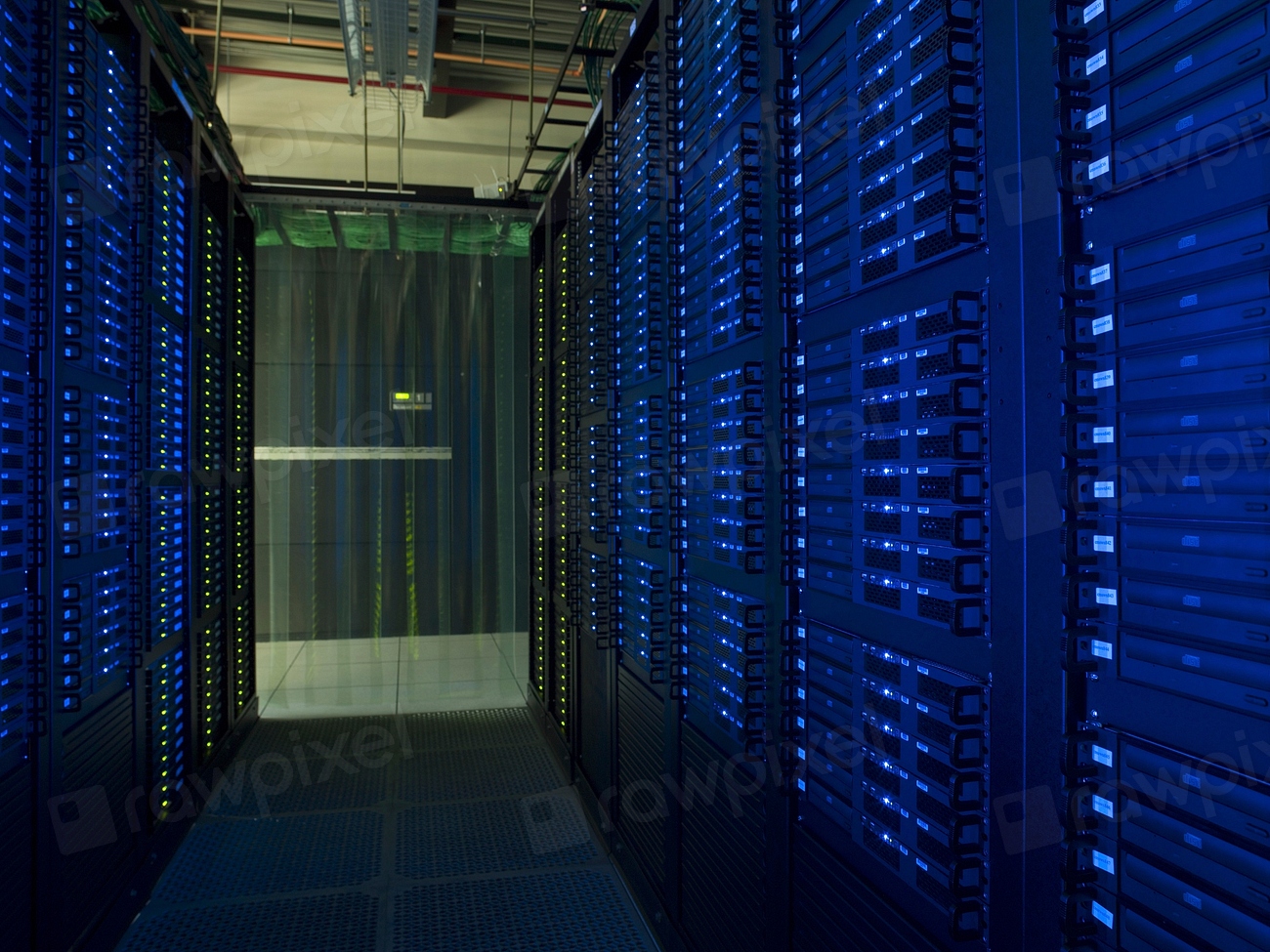
The US Federal Communications Commission (FCC) has authorised SpaceX on Wednesday 25 November to deploy up to 1 million satellites equipped with artificial intelligence (AI) chips as part of its Starmind project. Its chairman, Brendan Carr, announced the decision, which Bloomberg and The Wall Street Journal also reported. According to The Verge, it is the first approval the agency has granted for a full constellation of AI satellites.
Carr wrote on X, the social network owned by SpaceX, that Starmind and competing constellations will use solar power to extend US leadership in AI, according to CNBC. Elon Musk, SpaceX's founder, replied on the same platform that he was grateful and that the authorisation would be a major asset for the United States and the world.
How Starmind would work
According to The Verge, SpaceX presents Starmind as a way to capture solar energy in space to power AI capabilities on Earth. The company says the satellites will send data to the surface using high-speed lasers connected to Starlink, its satellite internet network. It also plans to manufacture the satellites' chips at a future plant called Terafab.
The authorisation sets deadlines. SpaceX must deploy at least one satellite before 2033 and reach 1 million by 2040, according to The Verge. The FCC has also left in abeyance the company's request to move satellites above 600 kilometres into ‘graveyard’ orbits, rather than letting them burn up in the atmosphere. The regulator argues that SpaceX has not provided sufficient information about its disposal plan.
Rivals and criticism
SpaceX's application received a considerable number of public comments, the FCC notes in its ruling. Kuiper Systems LLC (Amazon Leo), Viasat and the American Astronomical Society filed petitions asking for it to be denied. In March, Amazon argued in its filing that Starmind was more an overreaching ambition than a real plan, and said SpaceX would take centuries to build the constellation. Amazon representatives did not immediately respond to a request for comment on the approval, nor did SpaceX.
The FCC says in its ruling that it dismissed comments on matters outside its remit, including environmental ones, as well as concerns about the effect on optical astronomy. The astrophysicist and writer Adam Becker told CNBC by email that any serious attempt of this kind would further pollute the night sky and risk triggering a chain reaction of space debris collisions. Becker added that, in his view, Musk and Carr either do not understand the problem or expect others not to understand it.
Other companies are exploring the same idea. Google unveiled Project Suncatcher last year, which it describes as a bet on bringing AI to space, and in October it launched its first chips into space on a SpaceX rocket and a Planet Labs satellite. Blue Origin, Jeff Bezos's company, asked the FCC in March for permission to launch up to 51,600 satellites in a low-orbit constellation called Project Sunrise, which would work alongside its satellite internet service TeraWave, announced in January. According to The Verge, Blue Origin will make the first dedicated heavy-payload launch for Project Suncatcher in 2029.
On the markets
The Nasdaq 100 fell 1.30% and was trading at 25,874.45 points at 19:38 Madrid time, with the market open, against a previous close of 26,214.17. During the session, the SOXX semiconductor exchange-traded fund fell 2.64% to $125.22. None of the sources links these moves to the FCC decision.
Among the biggest decliners on the Nasdaq 100 were several memory, equipment and chip companies. Sandisk shed 8.12% to $71.62 and Lam Research lost 7.77% to $180.92. Micron Technology slumped 7.27% to $584.24, Applied Materials fell 6.30% to $303.36, and NVIDIA slipped 4.98% to $147.64.
On the other side, Axon Enterprise rose 8.31% to $345.86 and DoorDash gained 5.26% to $168.55. Analog Devices added 3.78% to $324.79, Paychex rose 3.33% to $118.91, and Take-Two Interactive climbed 2.89% to $226.79.
For now, the timetable set out in the material is that of the authorisation: a first satellite before 2033 and 1 million by 2040. SpaceX's request to remove satellites above 600 kilometres remains pending until the company provides more information to the FCC.
Questions and answers
- What exactly has the FCC authorised SpaceX to do?
- Deploy up to 1 million satellites fitted with AI chips, grouped in the Starmind constellation. According to The Verge, it is the agency's first approval for a full constellation of this kind.
- What deadlines must SpaceX meet?
- According to The Verge, it must deploy at least one satellite before 2033 and reach 1 million by 2040. The FCC has left in abeyance its request to remove satellites above 600 kilometres.
- Who opposed the application?
- Kuiper Systems (Amazon Leo), Viasat and the American Astronomical Society filed petitions asking for it to be denied, according to the FCC. The agency dismissed comments outside its remit, such as environmental ones.
Sources
- CNBC: SpaceX wins FCC approval to deploy 1 million orbital data center satellites
- Bloomberg: SpaceX Receives Government Approval to Launch Space Data Centers
- The Wall Street Journal: FCC Authorizes SpaceX to Build 1 Million Data Centers in Space
- The Verge: FCC signs off on SpaceX’s plan to put up to 1 million data center satellites into space
Was this story useful?
Comments
You need a free Celsmar account to comment.
Sign in or create accountNo comments yet. Yours can be the first.
Keep reading
- Celsmar Newsroom
Amazon and Meta discuss opening Amazon's store to Muse AI agent
According to Fortune, the two companies have held several rounds of talks. Amazon has blocked purchases made through Muse, Meta's artificial intelligence agent, since September.
Meta Platforms
- Celsmar Newsroom
Huang apologises to Nvidia staff and rules out succession plan
The chief executive, reinstated on 23 November, told employees he had let them down. Nvidia fell 5.86% to close at $155.38.
NVIDIA
- Celsmar Newsroom
Nvidia jumps 31.48% on Huang's return, then slips 3.9% before the open
Nvidia closed at $165.05 on Monday 23 November, up 31.48%, after the board announced the reinstatement of Jensen Huang as chief executive. On Tuesday the stock was down 3.9% ahead of the open.
NVIDIA
- Celsmar Newsroom
Nvidia brings back Jensen Huang as CEO and shares jump more than 27%
Nvidia's board has unanimously voted to reinstate Huang with immediate effect, eleven days after his resignation. According to CNBC, the board received advice from senior US government officials.
NVIDIA
Produced with artificial intelligence from the cited sources and translated from Spanish. Editorial responsibility: Celsmar. This is information, not financial advice, and it contains no recommendation to buy or sell. This is how the Celsmar Newsroom works.