South Korea, China and Taiwan step in as tech stocks slide
The three regulators have announced measures to calm their markets after artificial intelligence shares tumbled. The S&P 500 fell 3.70% on Friday 20 November.
By Celsmar Newsroom · Markets desk · Published on · 4 min read
Translated from the Spanish original. Read the original
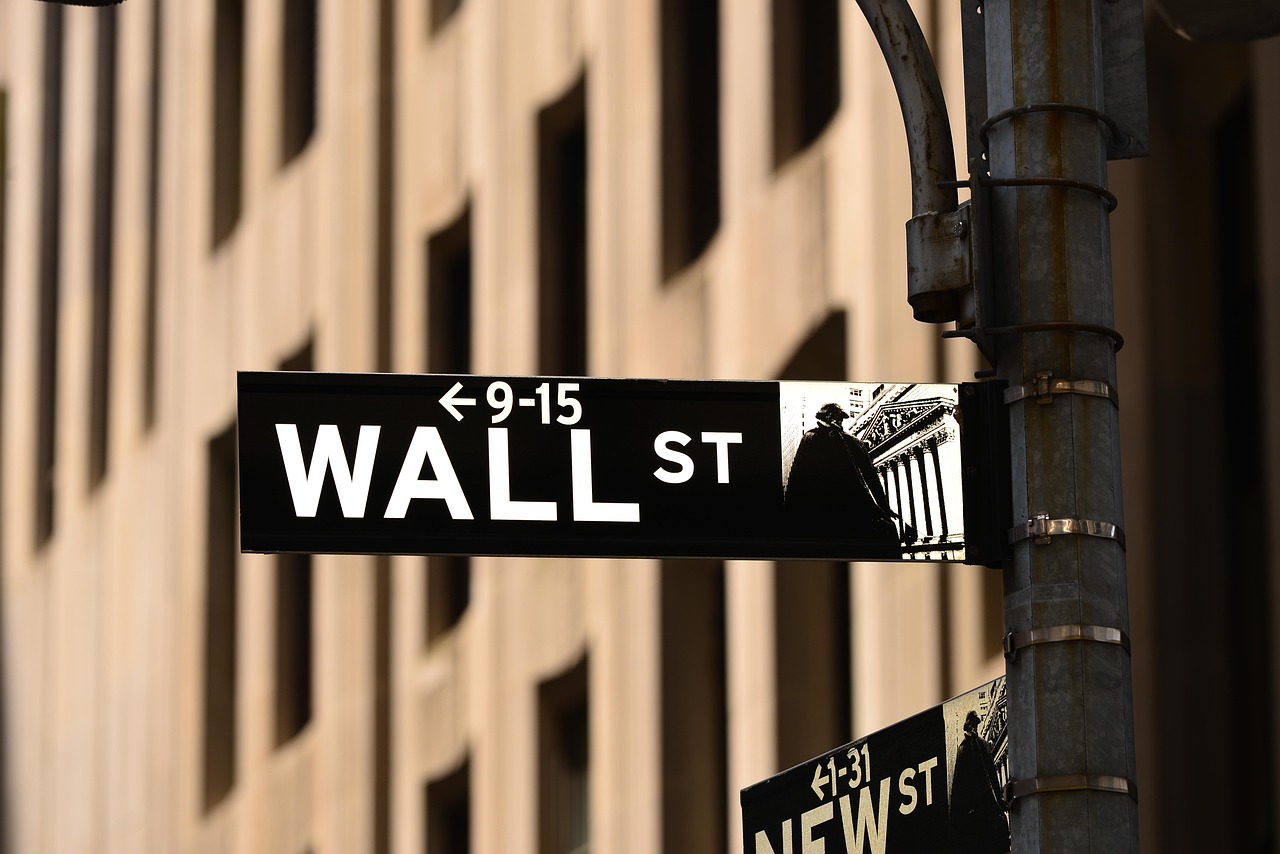
The S&P 500 fell 3.70% on Friday 20 November to close at 6,910.39 points, down from 7,175.83 at the previous close. During the session it moved between a low of 6,882.66 and a high of 7,198.67 points.
The Dow Jones lost 1.93% to finish at 48,147.33 points. The Nasdaq 100 closed at 25,028.98 points, a fall of 5.61% from 26,517.10. The VIX, the S&P 500 volatility index, rose 26.20% to 35.89, from 28.44 at the previous close.
The stocks that moved most
Among S&P 500 companies, the steepest falls were concentrated in technology and semiconductors. Sandisk shed 16.05% to 79.24, Bloom Energy 15.30% to 142.39 and Nvidia 14.01% to 125.53. Lumentum retreated 13.94% to 460.54 and Micron Technology 13.89% to 594.51.
The gains were smaller. Global Payments rose 9.95% to 91.83, General Mills 3.65% to 35.74 and McCormick 3.43% to 47.40. HCA Healthcare gained 3.31% to 475.57 and CoStar Group 3.17% to 29.61.
In Europe, the Ibex 35 lost 1.63% to close at 18,873.10 points, with a session high of 19,055.30 and a low of 18,831.00. Germany's DAX fell 2.60% to 24,802.78 points and the Euro Stoxx 50 dropped 2.81% to 5,941.95.
On the Spanish benchmark, ArcelorMittal was the biggest faller, down 5.66% to €51.64. It was followed by Laboratorios Rovi, which shed 4.54% to €63.10, ACS, down 4.50% to €82.80, and Acerinox, down 4.28% to €14.55. Acciona lost 3.55% to €184.70.
Among the gainers, Redeia rose 1.76% to €16.20. Enagás added 0.80% to €17.67 and Iberdrola 0.35% to €22.67.
The measures in Asia
According to CNBC, South Korea's Ministry of Finance announced on Sunday 22 November that it is preparing to activate immediately the stock market stabilisation fund, endowed with 10.76 trillion won. The government will also relax, for three months from 24 November, the daily limits on share buyback orders by listed companies. It will also open a period of intensive monitoring to prevent illegal short selling, and will keep track of margin loans and forced liquidations.
According to CNBC, the ministry explained that stock market volatility has increased because of uncertainty surrounding artificial intelligence and semiconductors, and because of interest rate rises in the United States. It added that expectations for the medium- and long-term growth of the artificial intelligence industry remain intact. According to the same report, the Kospi has fallen more than 46% from its June peak.
In Taiwan, the Financial Supervisory Commission announced on Friday 20 November that short selling below the previous session's closing price is completely banned. The rule allows an exception for hedging transactions by securities and futures firms. The regulator will also raise the margins required on those transactions and suspend applications for warrant issuance. CNBC notes that the Taiwanese market depends heavily on the technology sector, that TSMC fell 15% last week, and that the index lost 17.5%.
China has moved in the opposite direction. According to CNBC, the Shanghai, Shenzhen and Beijing exchanges will reduce from 30 November the minimum margin for buying shares on credit, from 100% to 80%. This allows investors to borrow more to buy. Shanghai and Shenzhen also announced fee cuts, and Shenzhen proposed a market-maker mechanism for its ChiNext platform.
Monday's reaction
Bloomberg reported on Monday 23 November that shares in South Korea and China fell despite the Asian authorities' measures. The agency noted that investor sentiment towards artificial intelligence companies remains fragile and that US markets were showing signs of stabilising. The Wall Street Journal and the Financial Times agree that regulators in the region have stepped up their action, and the latter points out that chipmakers and equipment producers are the most vulnerable to a change in mood.
The measures already have dates. The new share buyback facilities in South Korea begin on 24 November, and the margin cut for buying on credit in China on 30 November.
Questions and answers
- How far did the S&P 500 fall on 20 November?
- It fell 3.70% to close at 6,910.39 points. The Nasdaq 100 dropped 5.61% to finish at 25,028.98 points.
- What has South Korea done to support its stock market?
- According to CNBC, it is preparing to activate immediately a stabilisation fund of 10.76 trillion won and will relax share buyback limits from 24 November. It will also monitor short selling.
- What changes in China from 30 November?
- The Shanghai, Shenzhen and Beijing exchanges will cut the minimum margin for buying shares on credit from 100% to 80%, according to CNBC. This means investors can borrow more.
Sources
- CNBC: How Asian countries are looking to prop up markets as AI downturn sinks stocks
- Bloomberg: Asian Stocks Drop as AI Worries Offset Support Measures
- The Wall Street Journal: Asian Regulators Step Up Efforts to Calm AI-Driven Market Turmoil
- Financial Times: Asian regulators rush to support sagging markets as AI trade falters
Was this story useful?
Comments
You need a free Celsmar account to comment.
Sign in or create accountNo comments yet. Yours can be the first.
Keep reading
- Celsmar Newsroom
SharkNinja joins S&P 500 in place of AES and jumps 5.99% on Wall Street
SharkNinja shares closed at $225.37 on 23 November. MarketWatch reported that day that the company will join the S&P 500, replacing AES.
SharkNinja
- Celsmar Newsroom
Nikkei 225 rises 2.32% in Tokyo as Nasdaq 100 closes 6.86% higher
The Nikkei 225 climbs to 57,747.59 points in the session of 24 November. On 23 November, the S&P 500 closed 4.73% higher and Nvidia surged 31.48%.
- Celsmar Newsroom
Ibex 35 climbs 1.82% to 19,216.70 points as European and Wall Street shares rise
European bourses advance on 23 November, with the Euro Stoxx 50 up 2.40% and Germany's DAX up 2.23%.
- Celsmar Newsroom
S&P 500 Climbs 4.59% as Nvidia Soars on Huang's Return
The Nasdaq 100 gains 6.65% and the Dow Jones 2.63% at midday on 23 November. Nvidia rises 30.76% after its board reinstated Jensen Huang as chief executive.
Produced with artificial intelligence from the cited sources and translated from Spanish. Editorial responsibility: Celsmar. This is information, not financial advice, and it contains no recommendation to buy or sell. This is how the Celsmar Newsroom works.