Fed's Beige Book Shows Modest Growth and Rising Wage Pressure
The Beige Book published on 25 November describes stagnant consumer spending and rising costs. The 10-year Treasury yield eases to 4.85% and the S&P 500 falls 0.25%.
By Celsmar Newsroom · Economy desk · Published on · 3 min read
Translated from the Spanish original. Read the original
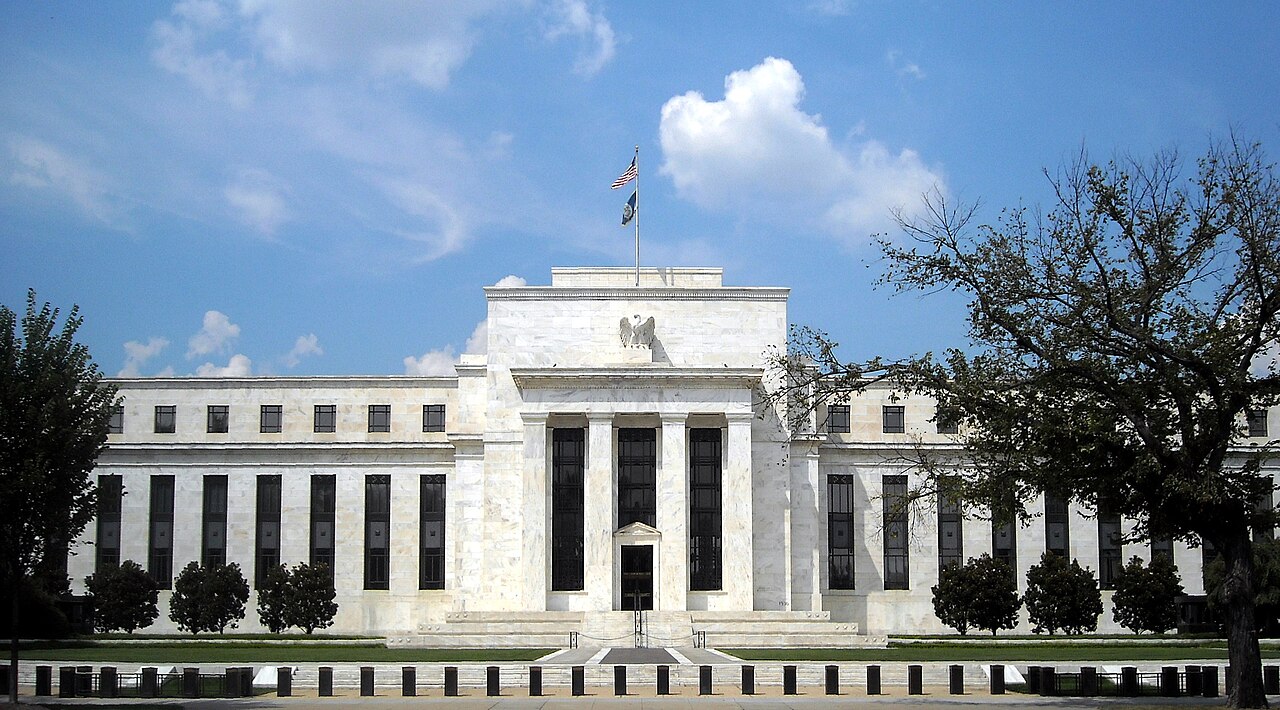
US economic activity has grown "slightly to moderately" in recent months, according to the Federal Reserve's Beige Book published this Wednesday, 25 November. The report draws on contacts from the central bank's various districts and says consumer spending has stalled as inflation squeezes household budgets.
Bloomberg summarises the document with the same message: most Fed districts saw slight to moderate growth in recent weeks, and businesses reported more wage pressure. The Financial Times, for its part, argues that the report confirms an overheating US economy and will help cement a rate rise that, according to the paper, will come in December. The Financial Times attributes that expectation to itself; the Fed's material does not include it.
Consumption, employment and costs
Consumer spending has remained virtually unchanged, according to the Fed. Households remain sensitive to prices and are increasingly selective about discretionary purchases. The car sector, hit by high fuel prices, housing and construction showed signs of weakness.
Manufacturing grew "modestly", as rising demand in several segments offset weakness in consumer-oriented and housing-related goods. Transport also expanded its activity, although demand was uneven, with capacity and infrastructure constraints and higher cost pressures.
In the labour market, employment has risen slightly. Many firms have kept headcounts stable and have hired mainly to cover departures, and only a minority reported significant increases. Wages and benefits have risen moderately, a pickup from the modest increases in the previous report.
Higher prices for energy, transport, healthcare, insurance and tariffs have squeezed production costs in most sectors. Raw materials, metals and specialist imports have also added pressure, though to a lesser extent. According to the Fed, input cost increases generally outpaced selling price increases, as competitive pressure and customer sensitivity limited firms' ability to pass on higher costs in full.
Other data releases
On the same day, 25 November, the United States published third-quarter gross domestic product (GDP): 4.3%, against the 3.4% expected and the previous 2.2%. The core personal consumption expenditures price index for October rose 0.3% month on month, in line with consensus and the previous reading, and was 3.3% on the calculation accompanying the release, against the 3.2% expected and the previous 3.1%.
October building permits came in at 1.297 million, against 1.295 million expected and 1.398 million the previous month. Continuing jobless claims stood at 1,697,000, below the previous 1,792,000. On Monday, 24 November, the Conference Board's consumer confidence index rose to 103.3 points, against the 92.4 forecast and the previous 91.9.
Bonds, currencies and equities
The US 10-year Treasury yield closed on 25 November at 4.85%, against 4.90% at the previous close, with an intraday low of 4.80% and a high of 4.86%. Over the past 52 weeks it has ranged between 3.96% and 5.36%.
The S&P 500 fell 0.25% to close at 7,182.78 points, from 7,201.09 the previous day. Its 52-week range runs from 6,316.91 to 7,844.52 points. The Ibex 35 lost 2.00% and ended at 18,635.80 points, which was also its low of the session; its 52-week high is 20,356.50 points and its low 16,153.10.
The euro trades at $1.0979, up 0.11% on the previous close, with a 52-week range between $1.0884 and $1.2024. Gold, in its futures contract, trades at $3,604.50 an ounce, up 1.12%, and its 52-week high is $5,586.20.
The sources do not give the date of the next Fed meeting or of the next Beige Book, so the latest known event is this Wednesday's publication.
Questions and answers
- What is the Beige Book?
- It is a Fed report that summarises the economic situation based on contacts in its regional districts. The 25 November edition describes growth as slight to moderate.
- What does it say about wages?
- That wages and benefits have risen moderately, a pickup from the modest increases in the previous report. Bloomberg adds that businesses point to more wage pressure.
- How have markets reacted?
- The US 10-year Treasury yield closed at 4.85%, against 4.90% previously, and the S&P 500 fell 0.25%. No source attributes those moves to the Beige Book.
Sources
- Europa Press: La economía de EEUU crece a un ritmo medio, pese a un consumo estancado y la presión de los precios, según la Fed
- Bloomberg: Fed Beige Book Shows Moderate Growth, Uptick in Wage Pressures
- Financial Times: Beige Book confirms hot US economy and signs of wage pressure building
Was this story useful?
Comments
You need a free Celsmar account to comment.
Sign in or create accountNo comments yet. Yours can be the first.
Keep reading
- Celsmar Newsroom
US PCE inflation climbs to 3.8% in October as core rises to 3.3%
The inflation gauge the Federal Reserve follows rose 0.3% in the month. Markets are pricing in a quarter-point rate hike at the 8 and 9 December meeting.
- Celsmar Newsroom

Average salary rises 4.7% in 2025 to €2,497.2 gross a month
According to the INE, it is the highest figure in a series that began in 2006. The gap between men and women stands at around €500 a month.
- Celsmar Newsroom

Cards edge out cash at euro area shops for first time, 45% against 44%
According to the ECB study published on 25 November, it is the first time since 2016 that cards are used more than cash at physical shops. In Spain, cash still leads, with 47%.
- Celsmar Newsroom

German GDP grows 0.1% in third quarter, below estimate
Destatis has revised down its initial estimate of 0.2%, and Europe's largest economy is losing momentum again after growth of 0.3% in the second quarter.
Produced with artificial intelligence from the cited sources and translated from Spanish. Editorial responsibility: Celsmar. This is information, not financial advice, and it contains no recommendation to buy or sell. This is how the Celsmar Newsroom works.